
Durham NC Neighborhoods Guide (2026): Prices, Taxes and Trade-Offs

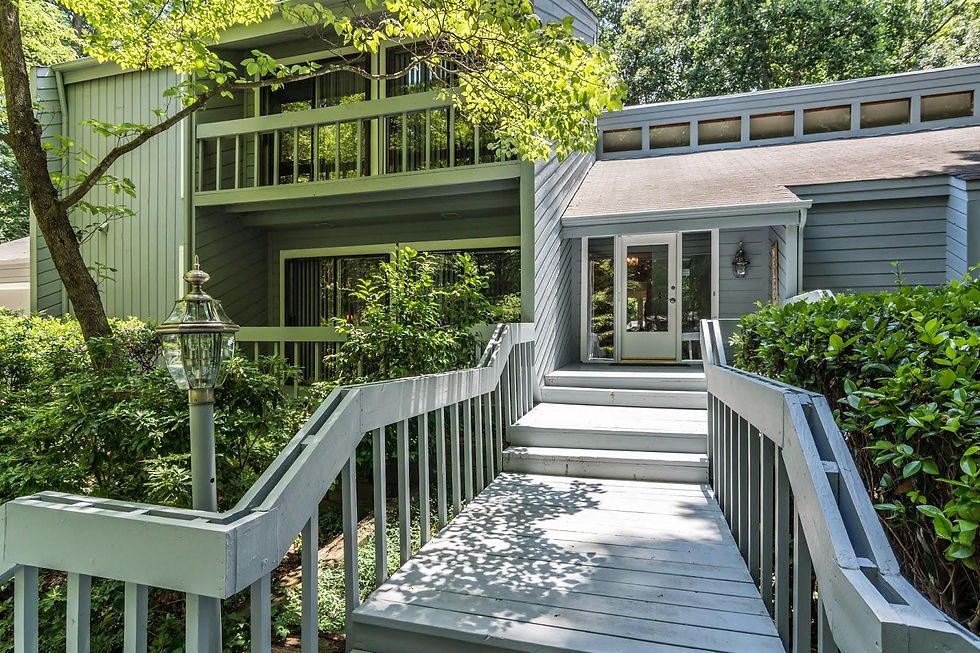
Durham is a buyer's market in a way Cary isn't right now. Prices are off slightly from last year, homes are taking about a month to sell, and most sellers are taking a little under asking. That's not a crash — it's negotiating room, which we haven't had much of since 2020.
Durham at a glance
Median sale price: $424,787 — down 2.3% year over year
Median days on market: 31 — unchanged from 2025
Sale-to-list ratio: 98.6% — down 0.35 points
Homes sold: 1,079 — up 8.6% year over year
Redfin, three months ending August 2026, city of Durham.
But "Durham" as a single number is close to useless. In the three months ending mid-2026, one in-town historic pocket was selling at roughly $862,000 while an established south Durham neighborhood eight miles away was clearing at $479,833 in eight days. Same city, same week, completely different conversations at the closing table.
So here are the four parts of Durham I get asked about most — what the housing stock actually is, what it's costing, and the trade-off in each. I've put the reporting period next to every number, because Durham's neighborhood-level data moves on small sample sizes and a stat that's ten months old will lie to you.
Trinity Park and Old West Durham
Pre-war bungalows and foursquares within walking distance of Ninth Street and Duke's East Campus. The most expensive per-foot housing in this guide, and the slowest-moving.
Median sale price: $862,000 (up 11.6%)
Days on market: 62
Vs. list: 2.7% under
Three months ending July 2026
You're buying houses built mostly between 1910 and 1940 — deep front porches, original heart pine, ten-foot ceilings, and the systems that come with a hundred-year-old house. Budget for what you can't see. I tell clients to price out the panel, the sewer lateral, and any knob-and-tube before they write, not after inspection, because in this pocket those are the numbers that actually move a deal.
Sixty-two days on market, up from thirty-three the year before, and homes trading a couple points under list. Historic in-town Durham is where sellers are having to meet buyers right now.
One thing to check address by address: parts of in-town Durham fall inside local historic districts, where exterior changes require a Certificate of Appropriateness from the city's Historic Preservation Commission. That's a real constraint on window replacement, additions, and paint — worth confirming on Durham's GIS before you fall for a house you plan to change.
The trade-off: walkability and architecture you can't build new, at the highest price per foot in Durham, in houses that will ask for money. Only four sales closed in the most recent month here — treat that median as directional, not gospel.
Hope Valley and Woodcroft
Mid-century and later houses on bigger lots, with the fastest-moving inventory in this guide. Eight days on market.
Median sale price: $479,833
Days on market: 8 (down from 22)
Price per square foot: $243
Sold over list: 36.2%
Three months ending August 2026
This is the part of Durham where the citywide "buyer's market" story falls apart. Hope Valley sales were up 31.7% year over year, homes went from 22 days to 8, and more than a third sold above asking. If you're shopping here, come pre-approved and be ready to see it the day it lists.
Two different products under one heading. Hope Valley proper is larger lots and older custom homes around the golf course, mostly detached, mostly renovated at least once. Woodcroft next door is a planned community from the late 70s and 80s — townhomes and patio homes, an HOA, and greenway trails that connect through the neighborhood. Woodcroft's most recent reliable read was a $422,000 median at $243 per foot, but that's a November 2025 figure and the segment is thin, so pull live comps before you set an expectation.
Both sit close to 15-501 and I-40, which is what makes them work for RTP commuters without paying in-town prices.
The trade-off: you give up walkability — this is a driving part of Durham — and you're competing. At the same per-foot price as Woodcroft townhomes, Hope Valley buys you land; the question is whether you want the lot or the lock-and-leave.
Southpoint and the Parkwood corridor
The newest housing stock in this guide, the shortest RTP commute, and an approved redevelopment that will change the area around the mall.
Townhomes and newer detached houses, which for a lot of my buyers is the whole appeal: nothing to redo, a builder warranty if it's new enough, and I-40 right there. First-time buyers and RTP transferees end up here more than anywhere else in Durham.
The thing to know before you buy: Durham City Council rezoned The Streets at Southpoint in 2023 for up to roughly 1,380 apartments, a 200-room hotel, and 300,000 square feet of office on the mall property. It's a phased, multi-year plan, and it will mean construction and traffic pattern changes near 15-501.
Whether that reads as an amenity or a nuisance depends on how close you are to it — so ask me which phase is actually underway before you write on something adjacent.
Watch HOA structure carefully in this corridor. Townhome regimes here vary a lot in what dues cover — some include exterior and roof, some don't — and that's a several-hundred-dollar-a-month difference in your real cost of ownership.
The trade-off: newest houses, easiest commute, least character — and you're buying next to a large approved development that hasn't finished happening yet.
Downtown and Brightleaf
Condos and lofts in converted tobacco buildings and newer infill. The segment where I'd tell you to distrust every published statistic.
I'm not going to print a median for downtown, because the public figures for this neighborhood are being calculated off a handful of sales including new-construction closings that skew everything. I've seen year-over-year swings north of 100% reported here. That's a data artifact, not a market.
What's real: downtown is a walkable core — American Tobacco, the DPAC, Brightleaf, restaurants you can leave the car for — and it's the one part of Durham where you can genuinely live without driving daily. Downsizers and people relocating from denser cities gravitate here.
Two things decide these deals. First, dues: on a condo, the monthly HOA payment can carry as much weight in your affordability math as the mortgage rate does, and special assessments in older converted buildings are a live question. Second, financing: conventional and FHA lending on condos depends on the whole project qualifying — owner-occupancy ratios, reserves, litigation — so the building has to be approvable, not just you. I check that before we tour, not after.
The trade-off: the only truly walkable option here, with the least reliable pricing data, the highest carrying costs beyond the mortgage, and the narrowest resale pool.
What it actually costs to own in Durham
Durham has a reputation for high property taxes, and the combined rate is higher than Cary's — but not by as much as people assume. Inside Durham city limits you're paying the county rate plus the city rate. In Cary you're paying Wake County plus the town.
Durham, inside city limits (FY 2026–27): county $0.5792 + city $0.4371 = $1.0163 per $100
Cary, Wake portion (FY 2026–27): county $0.5371 + town $0.3675 = $0.9046 per $100
On a $500,000 assessed value, that's roughly $5,082 a year in Durham versus $4,523 in Cary — about $47 a month. Real, but rarely the thing that decides a purchase, especially when the median Durham house is running about $220,000 less than the median Cary house.
What's more interesting is what happened this year. Durham's revaluation produced over 10,000 appeals and a $4.4 billion decline in countywide assessed value — and 93% of that reduction came from commercial properties, which made up only 12% of the appeals. The city lost about $9 million in expected revenue and held its rate flat at 43.71 cents; the county raised its rate, which is roughly $100 more a year on a $400,000 home.
The practical takeaway for a buyer: your tax bill is calculated on the county's assessed value, not on what you pay. Those two numbers have drifted apart in Durham more than usual, in both directions. Before you finalize a budget, look up the actual assessment on the specific address rather than estimating from the sale price — and if you're escrowing, expect your lender's first-year estimate to need correcting.
If you're selling in one of these neighborhoods
The spread between these submarkets is the whole story right now. Hope Valley sellers are getting eight days and multiple offers. Trinity Park sellers are getting sixty-two days and a negotiation. Pricing either one off a citywide median is how listings sit.
Three things I'd do differently by neighborhood this fall. In historic in-town Durham, pre-inspect — with two months of market time, the buyer who finds a sewer issue in week eight has all the leverage, and the one who saw your report in week one doesn't. In fast-moving south Durham, price at the number that generates competition rather than the number that starts a negotiation. In condos, get the building's financing documentation together before you list, because a project that won't qualify for conventional lending cuts your buyer pool down to cash and portfolio loans.
Common questions
Is Durham a buyer's or seller's market in 2026?
Citywide, it leans buyer: prices are down 2.3% year over year, homes take a median of 31 days, and sellers are taking about 1.4% under list. But it varies sharply by neighborhood — Hope Valley homes were selling in 8 days with 36% going above list in the same period. The citywide number won't tell you what to expect on a specific street.
What's the median home price in Durham, NC?
$424,787 for the three months ending July 2026, down 2.3% from a year earlier. By comparison, Cary's median was $644,677 over the same period.
Are property taxes higher in Durham than in Cary?
Yes, but modestly. For FY 2026–27, a home inside Durham city limits pays a combined $1.0163 per $100 of assessed value versus $0.9046 in Cary — about $560 a year more on a $500,000 assessment. That's usually outweighed by Durham's lower purchase prices.
Which Durham neighborhood is best for RTP commuters?
The south Durham neighborhoods — Hope Valley, Woodcroft, and the Southpoint and Parkwood corridor — sit closest to I-40 and 15-501 and typically produce the shortest RTP drives. Downtown and Trinity Park trade commute time for walkability.
Should I buy a condo in downtown Durham?
It depends on the building as much as the unit. Conventional and FHA financing require the whole project to qualify — owner-occupancy ratios, reserves, and any litigation all matter — and HOA dues plus potential special assessments in older converted buildings can change your monthly cost significantly. Get both reviewed before you tour seriously.
How much house does $500,000 buy in Durham?
It depends entirely on where. In Hope Valley or Woodcroft, at roughly $243 per square foot, that's around 2,000 square feet. In Trinity Park, where the median is $862,000, $500,000 is generally a smaller or unrenovated house. In the Southpoint corridor it typically buys newer construction or a larger townhome.
Looking at Durham?
I'll pull live comps for the specific neighborhoods you're considering, run your actual commute, and check the tax assessment and any HOA or historic-district constraints before you write an offer. Blue Orchid Realty represents buyers and sellers across the Triangle — and lists at a 1.5% listing fee.
Sources
Redfin market data — Durham, Trinity Park, Hope Valley, Woodcroft
Tax rates — Durham County Tax Administration, Triangle FY 2026–27 rate changes
Southpoint rezoning — WRAL
Historic districts — City of Durham


Comments